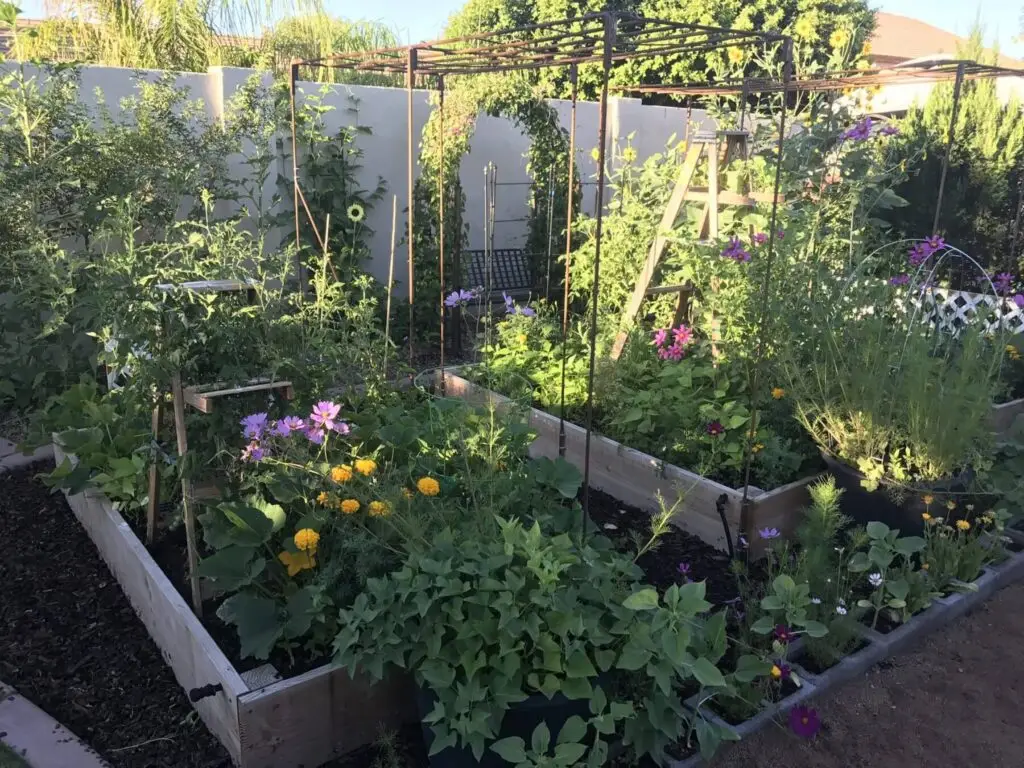
Vertical gardening adds another dimension to your garden. Reasons to “go vertical” include extra room when space is limited, healthier and more productive plants, beautifying your space, or camouflaging an unsightly area of your yard. Want to give it a try? Here are a few tips and ideas for using the vertical space in your garden.Maximize your garden space – Space in the garden is often limited. Utilizing the vertical area above your garden extends your growing area, allowing more room to plant! Rather than having vining crops encroach your garden bed, train them to grow up a trellis.
Choose the right location to garden vertically – Trellises can block the sun from reaching your garden if placed in the wrong location. To maximize sunlight, position trellises on the north edge of your garden bed or next to a fence or wall. Alternatively, shade sun-sensitive plants in hotter regions by having the trellises on the south side, filtering the sunlight for plants that need relief from the summer sun.Decide if you want it to be permanent or removable – Many warm season crops are vining (such as cucumbers, tomatoes, and pole beans) and could benefit from a trellis, but a lot of cool season cole crops do not vine and do not require a trellis. If you grow both in the same area, a removable trellis would be helpful. Use it and then put it away until needed next season.
Look forward to healthier plants – Plants left to sprawl on the ground can attract unwanted pests and are more susceptible to damage from disease. Gardening vertically allows more sunlight and air to reach the plant. It’s also easier to discover pests and problems earlier, making them easier to solve. The added sunlight and airflow also increase production. You’ll harvest extra produce more easily because you don’t have to hunch over and search for the fruits of your labors.Garden vertically to block unsightly views or to create privacy – A vertical garden can do both beautifully. A living green wall, arbors, arches, trellises, or even repurposed hardware items can provide means for plants to grow vertically and change the view for the better.
Select garden plants that love growing vertically – These include indeterminate tomatoes, cucumbers, melons, small pumpkins, peas, luffa, Malabar spinach, and many bean varieties. As a bonus, cucumbers and luffa will grow straighter when trellised and allowed to hang down. Some plants will find the trellis and climb on their own, while others need you to tuck new growth in and around the trellis.
Share The Garden Love
About the Author:

Angela Judd is an avid vegetable, flower and fruit tree gardener. A mother of five children, she enjoys growing and preparing food from the garden for her family. She is a certified Master Gardener. She shares inspiration and tips to help home gardeners successfully grow their own garden on growinginthegarden.com. Follow her on Instagram and Facebook.