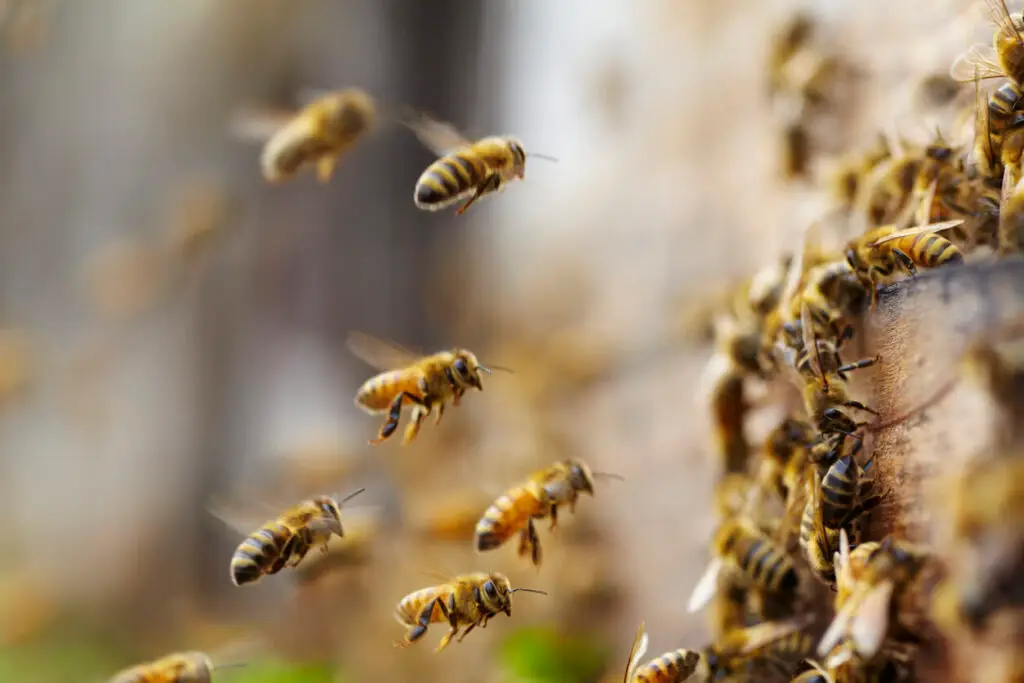
We have two beehives on our property. Well, actually, we now have one — the original hive did not make it through the winter last year, so come spring, our bee population was cut in half. Now, I’m not the beekeeper on our property, and neither is my husband — the bees are the hobby of our friend, Todd, who comes regularly to check on things. Todd surmised, after inspecting both hives, that some moisture got into the failed one. Now we know better, and the lesson we learned may help your hive stay alive and healthy during the winter. Check out our winter beekeeping tips below!
Read More: QUICK GUIDE TO STARTING YOUR OWN BEEHIVE
HOW TO CARE FOR YOUR BEES DURING THE WINTER
Inspect your hive. It’s really best to do this in the fall when any necessary adjustments can be made. Assuming you completed a fall inspection, you’ll know if your queen is healthy and if your hive is disease-free. If you’ve had your queen for 2 seasons, she has a 50-50 chance of making it through the winter. If you need to re-queen or combine hives for health, it’s best to do it in the fall.
Keep the hive dry. I’ve been told by many bee experts that it’s not cold that kills bees, it’s wetness. If necessary, wrap your hive with black tar paper, which will keep snow and rain from creating wetness on the inside of the hive, and will warm the hive on sunny days. Be sure the entrance to the hive is free and unclogged as well, as a clogged entrance will keep dampness from evaporating. A warm and dry hive with good ventilation will thrive throughout the winter and will be much healthier come spring.Ensure your food supply. This is always important to pay attention to, but particularly if you harvest honey from your hive. Any honey taken from the hive is honey taken away from the bees, and to get through the winter, your bees need approximately 30-60 pounds of stores (8-9 full frames), less the farther south you live. Know how many frames you have in your hive and what their average weight is (typically around 7 pounds per frame) — if your fall inspection reveals a lack of food going into the winter, prepare to feed them yourself. A 2:1 sugar syrup will work well, as do purchased or DIY sugar blocks, candy boards, and winter patties.
Tip: Always be aware of what your particular bees need in your area. Different climates and various bee breeds/races have specific requirements, and it’s imperative to arm yourself with this information.See Also: COLD WEATHER PLANNING FOR CHICKENS, DUCKS, GOATS, AND PIGS