To plant potatoes, start with sprouted seed potatoes and wait until your soil reaches at least 45°F. Dig a trench about 8 inches deep, set the seed potatoes 12 inches apart with the sprouts facing up, and cover them with 4 inches of soil. As the plants grow, fill the trench the rest of the way and give them 1 to 2 inches of water a week. Most varieties are ready to harvest in 70 to 120 days.
Potatoes are a forgiving first crop. They shrug off a late watering or a crooked row, and few things beat digging up a dinner you grew yourself.
Potato Planting Quick Guide
| What you need to know | Target |
| Soil temperature | 45°F or warmer |
| Trench depth | 8 inches |
| Spacing | 12 inches between seed potatoes |
| Row spacing | 3 feet |
| Water | 1 to 2 inches per week |
| Days to harvest | 70 to 120 days |
| Sunlight | 6 or more hours of direct sun |
Preparing Potato Seeds
Here’s what surprises a lot of first-timers. The “seed” is a whole potato, and a little prep before planting day gives it a head start.
Sprouting (Chitting) Seed Potatoes
About 2 to 4 weeks before you plan to plant, set your seed potatoes in a single layer, eyes up, somewhere bright that stays around 60 to 70°F. Gardeners call this chitting. An egg carton on a windowsill works well, and it makes a fun daily check-in for kids. In 1 to 3 weeks you’ll see short, sturdy sprouts, and once they reach half an inch to an inch long, your potatoes are ready. Sprouted potatoes grow faster once they’re in the ground, which can mean an earlier harvest.
Cutting Seed Potatoes
This step makes a lot of people nervous, and it doesn’t need to. Small seed potatoes, about 2 inches across or less, go in whole. Bigger ones can be cut into pieces so one potato becomes two or three plants. Just make sure each piece has one or two eyes, then let the pieces sit out for a day or two. The cut side dries into a callus that keeps it from rotting in cool soil.
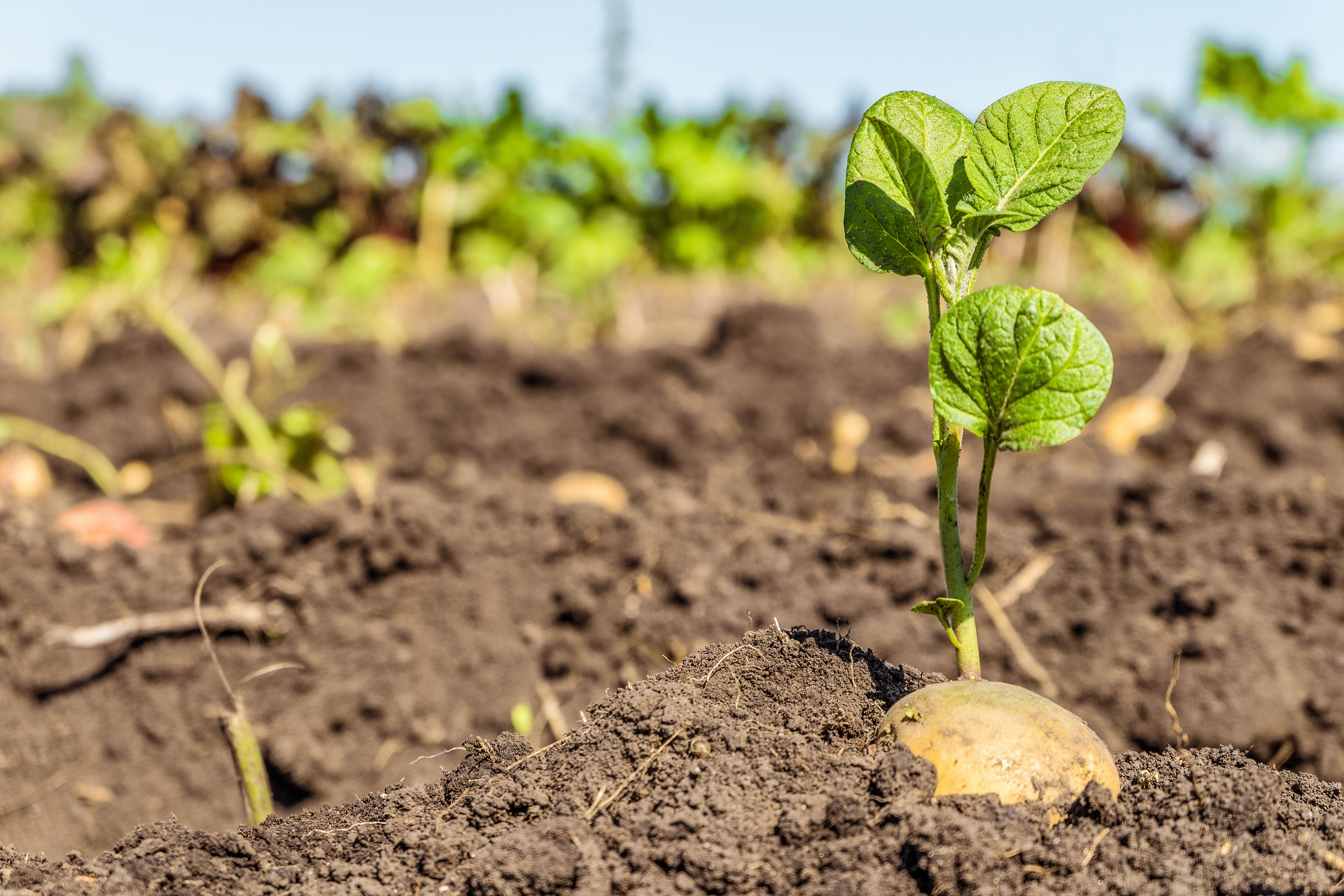
How to Plant Potatoes Step by Step
Plant once the ground can be worked and the soil has warmed to 45°F, usually 2 to 4 weeks before your last frost. Timing shifts a lot by region, so check our chart of when to plant vegetables by zone for yours. Pick a spot with at least 6 hours of direct sun and good neighbors. Shallow-rooted crops like lettuce, spinach, and basil grow happily beside potatoes, and our guide to potato companion plants covers the rest. Work a few inches of organic garden soil into the bed before you dig.
- Dig a trench about 8 inches deep, with rows at least 3 feet apart. If the bed is soggy, let it drain a few days first, since wet soil can rot seed potatoes.
- Set the seed potatoes 12 inches apart, sprouts up. Cut pieces go cut side down.
- Cover them with about 4 inches of soil.
- Once the plants break the surface, fill the trench level with the ground.
- At the same time, scratch a granular organic fertilizer into the soil so it doesn’t wash away when you water.
- Feed every 5 to 6 weeks after that, following the rate on the bag. Pale leaves between feedings are a sign to add a liquid organic fertilizer for a quick boost.
- Keep mounding soil around the stems as the plants grow. This is called hilling, and it matters because potatoes exposed to sunlight turn green, and green potatoes shouldn’t be eaten.
Planting in Containers or Raised Beds
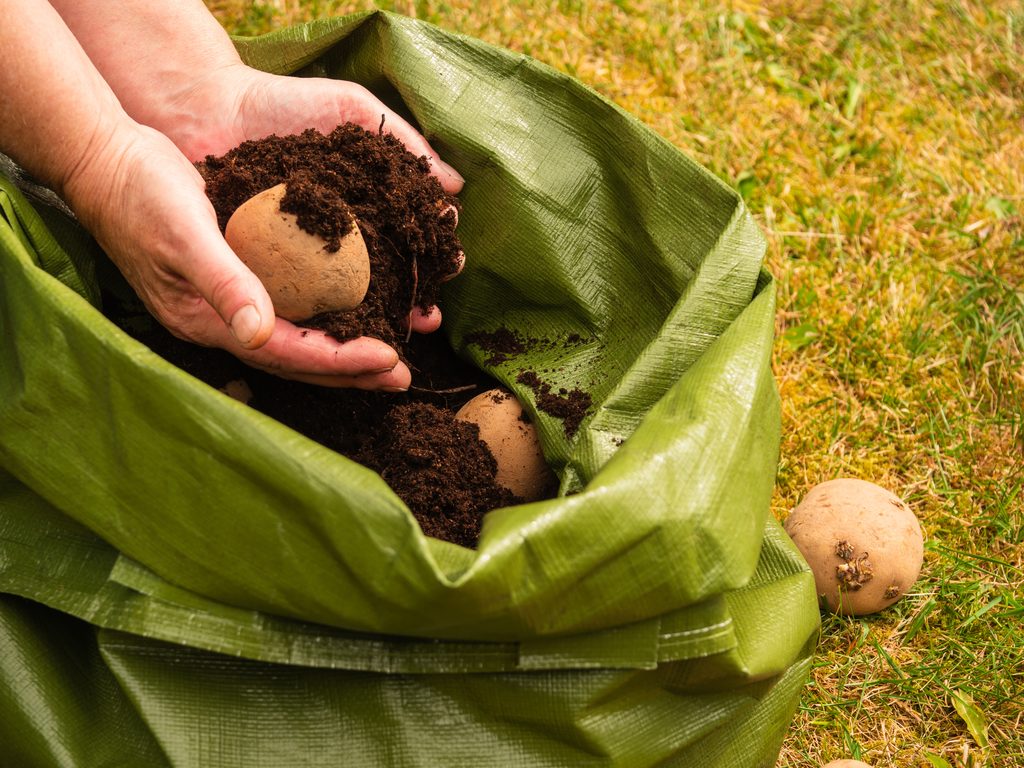
If you’re short on space, or you’d like the most forgiving first try, grow your potatoes in a bag that holds at least 10 gallons. Fill it with about 6 inches of Kellogg Garden Organics Raised Bed & Potting Mix, set 1 to 3 seed potatoes on top with the sprouts up, and cover them with 2 to 3 inches more. Each time the plants grow about 6 inches, add mix until only the top few leaves show. Bags dry out faster than garden beds, so check them every day or two. The same steps work in a raised bed at least 12 inches deep. Harvest is as easy as tipping the bag over.
Best Plant Food for Potatoes
Potatoes are hungry, but they’re picky about what they eat. Too much nitrogen grows a jungle of leaves and very few potatoes. Check the three numbers on the bag, called the NPK ratio, and choose a formula with more phosphorus (the middle number) than nitrogen (the first).
Kellogg Garden Organics Tomato, Vegetable & Herb Plant Food has a 4-6-3 ratio, which suits potatoes well. It’s OMRI Listed, so you know exactly what’s going into the soil your dinner grows in, and its granular formula scratches in just the way the steps above describe.
Start with the right soil for where you’re planting. For in-ground rows, work Kellogg Garden Organics All Natural Garden Soil for Flowers & Vegetables into the bed, or use Kellogg Garden Organics Amend Garden Soil for Flowers & Vegetables if you live in Arizona, California, Hawaii, Nevada, or Utah. Grow bags and raised beds take Raised Bed & Potting Mix straight from the bag. Browse all Kellogg Garden Organics organic plant food and soils.
Caring for Potatoes Until Harvest
Once your potatoes are in, they mostly look after themselves. Give them 1 to 2 inches of water a week, more if your soil is sandy or your summers are dry, and pay extra attention when the plants flower. That’s when the potatoes underground are growing fastest.
Potatoes like slightly acidic soil, around 6 to 6.5, so hold off on lime unless a soil test says otherwise, since a higher pH invites scab. Planting them in a new spot each year keeps most diseases away, and an organic spray or dust helps keep Colorado potato beetles, aphids, and flea beetles in check.
When the flowers fade, harvest is close, and our guide on when to harvest potatoes covers timing and storage.