
Carbon sequestration. It’s a big term with a simple meaning, yet it packs a whole lot of punch for the earth!
Simply put, carbon sequestration is the means by which valuable carbon is returned to the soil. A process that many scientists believe has the power to slow climate change. [1] In fact, a mere 2% increase in the carbon content of the planet’s soils could offset 100% of all greenhouse gas emissions going into the atmosphere. That’s huge![2] Did you know soils can hold three times the amount of carbon currently in the atmosphere or almost four times the amount held in living matter? But not just any soil, of course.
Carbon sequestration (returning that valuable carbon back to Mother Earth) works best in organic soil. Organic soil components come from living or once living organisms that contain carbon, while inorganic components do not.
Soil rich in organic matter creates healthy vegetation. This healthy vegetation works together with said organic soil and beneficial microorganisms in the soil to remove carbon dioxide from the air and store it as soil carbon. Carbon is literally being pulled from the earth’s atmosphere and then is being stored in the soil!
By choosing to use an organic soil instead of an inorganic soil, you can offset carbon (a greenhouse gas) going into our atmosphere. This simple, yet important process is a gigantic step forward in addressing climate change.More good news: there are some other techniques we can practice to nurture soil and increase carbon storage (thus offsetting greenhouse gases being released into the atmosphere). [3]
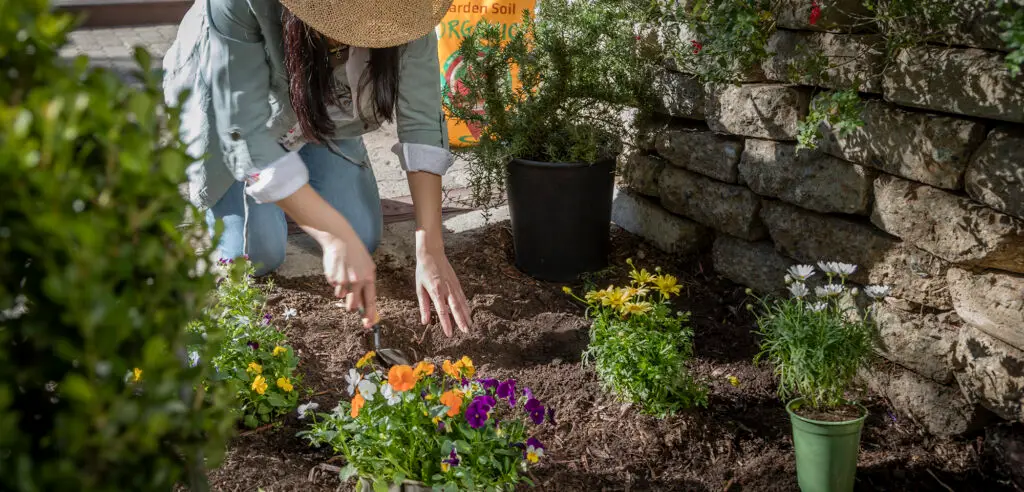
- Applying compost to your garden jumpstarts the conversion of atmospheric carbon into soil organic matter and plant material. Compost improves conditions for beneficial microorganisms that keep your plants healthy and increases water-holding capacity that keeps your plants quenched.
- *Tip: This leads to greater plant growth and more carbon storage – a win for your plants and for the earth!
- Minimize soil disturbance from the damaging effects of compaction, erosion and tillage. Compacted soils do not have adequate space for air and water between soil particles, which means plants, fungi, and microbes can’t thrive. Erosion and tilling expose soil carbon to oxygen which releases it into the atmosphere.
- *Tip: You want that carbon to stay put in your soil!
- Keep soil covered with mulch and/or plants. Mulch encourages microbial activity, helps soil retain moisture and prevents erosion. Woody perennial plants store large amounts of carbon in their plant material, and their roots provide excellent habitat for beneficial microorganisms.
- *Tip: Think of your mulch and/or plants as a calming, weighted blanket that nurtures and helps stabilize your soil’s ecosystem.
- Avoid using synthetic fertilizer, herbicides and pesticides. Synthetic inputs harm the microorganisms that sequester carbon. Also, applications of synthetic nitrogen fertilizer can cause emissions of nitrous oxide, a greenhouse gas that is 300 times more potent than carbon dioxide.
- *Tip: Make sure any fertilizers used are organic and natural, assisting in returning valuable nutrients to your soil.
- Protect your big trees! Mature trees provide multiple climate benefits and help avoid releasing stored carbon. Plant large stature trees to help mitigate climate change and keep as much of that carbon sequestered rather than released into the air.
- *Tip: If mulch and plants are a calming weighted blanket, mature trees are a big, warm hug and a dozen weighted blankets for your soil!
Adding compost, adding mulch, and using cover crops are just three of several techniques the average gardener can use to do their part in sequestering carbon in the soil. Sequestering carbon not only benefits the plants and food that you grow, but has enormous benefits for the earth, too. We all can make a big difference with small acts like these!
Carbon sequestration stats & quick facts:
- A mere 2% increase in the carbon content of the planet’s soils could offset 100% of all greenhouse gas emissions going into the atmosphere. [1]
- The use of cover crops combined with adding compost to the soil increased soil carbon content by 12.6%. [2]
- Soils can hold three times the amount of carbon currently in the atmosphere or four times the amount held in living matter. [4]
- If we increase soil carbon content by 4% a year it would offset the annual increase in atmospheric carbon dioxide. [5]
Citations:
-
-
- [1] Dr. Rattan Lal, Ohio State Soil Scientist
- [2] UC Davis Researchers, 2019
- [3] Rescape + Pacific Gas & Electric
- [4] American University, Washington D.C.
- [5] The International 4 Per 1000 Initiative
-