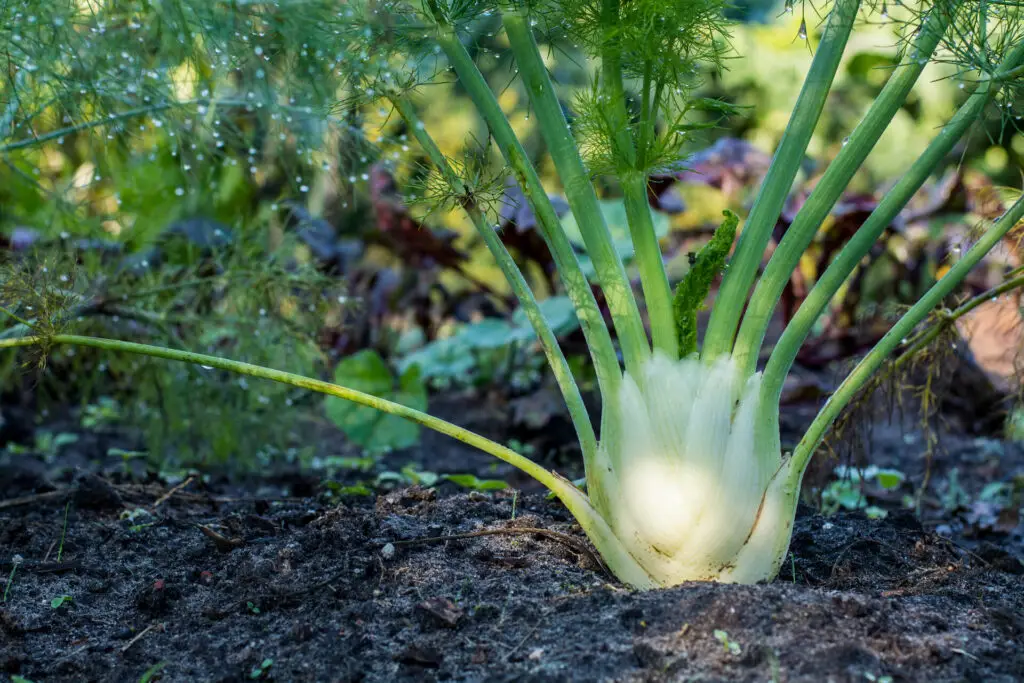
Growing fennel is done for its bulbous white base that looks much like an onion, is layered like cabbage, and has a celery-like crunch. It produces a flavorful harvest with a hint of anise and feathery foliage that is readily used as a garnish and is prevalent in soups.
Fennel is an herb in the carrot family used in many cultures for medicinal and culinary purposes. Take a look and learn as we explore growing fennel: tips & more.
Ideal Soil Composition & pH for Growing Fennel
Fennel prefers soil that is rich in organic material and well-draining. Fennel plants grow best in soil that measures between 5.5 and 6.8 on the pH scale. Amend the soil with organic material and well-decomposed compost for in-ground planting.
Light & Temperature Requirements for Growing Fennel
Fennel is a cool-season crop that grows best in the spring and the fall months—plant fennel in an area that receives full sunlight.
Growing Fennel from Seed
Fennel is not as easy to come by as many other herbs and vegetables. As favorable as they are, they are less likely than others to be readily available as plants at garden centers and on nursery racks.
Your best bet for growing fennel in your garden is to start them from seeds yourself.
- Seeds can be sown directly into the garden. Plant seeds at a depth of ¼ inch to ½ inch and cover lightly with soil.
- There is more chance for success when you start seeds indoors and transplant them into the garden bed. Plant seeds at a depth of ¼ inch to ½ inch. Transplant outdoors when the danger of frost has passed.
- Fennel plants will self-sow if allowed to go to seed.
How to Grow Fennel
This fast-growing plant can grow quite large, so it should be grown outdoors. Fennel can be grown in containers as well as in-ground in backyard gardens, but care should be used when interplanting it with other crops.
- Sadly fennel is not a friendly neighbor in vegetable garden beds, so it’s best to keep fennel separated from other plant species.
- Fennel attracts beneficial insects to your garden, pulling in ladybugs, syrphid flies, tachinid flies, beneficial parasitoid wasps, and hoverflies that feed on common garden pests.
How to Plant Fennel
Fennel plants can grow between 3-6 feet tall. Plants should be spaced 12-18 inches apart with two to three feet between rows.
When to Water Fennel
Water plants regularly until they’re established. Once fennel plants are well rooted, they can tolerate some degree of drought.
Nutrients Needed for Growing Fennel
Fennel is a pretty easy-going plant. It doesn’t need much fertilization other than initially being planted in soil that is rich in organic matter. You can always add a side-dressing of compost to plants to give them an extra boost.
Common Fennel Plant Pests & Diseases
Fennel is a relatively low maintenance plant and is not often plagued by pests and disease, but you may run into a few trouble spots now and then.
These are some of the challenges to look out for when growing fennel:
- Caterpillars – You may notice some caterpillars on your plant’s foliage. The swallowtail butterfly is likely to seek out this crop. If you can spare a little bit of foliage, you’ll be adding to the ecosystem and promoting beneficial insects.
- Aphids – A sharp spray of the hose should help to keep aphids at bay. You can also plant and grow nasturtium flowers nearby as trap crops.
- Downy Mildew – Space plants adequately for proper airflow between plants.
- Powdery Mildew – Space plants adequately for proper airflow. If this disease is present, spritz plant leaves with a mixture of 1 tsp of dish soap per 1 gallon of water to help get rid of powdery mildew on plants.
Harvesting Fennel
Fennel matures very quickly in the garden and you can harvest the plant in about two months’ time. Harvest the feathery fronds once the fennel plants are established and snip off foliage to use as a garnish.
Harvest the bulb when it is at least two to three inches in diameter. Seeds can be harvested after the flowers have dried on the plant. Care should be used when gathering seeds, as dropped seeds will produce more fennel plants.
Here are some tasty ways to use fennel:
- Raw fennel can be sliced thinly and added to salads for an unexpected, intense anise flavor.
- When roasted, the crunchy taproot softens both in texture and taste.
Recommended Fennel Varieties to Grow
There are lots of fennel varieties that you can choose from. Try some of these fennel varieties in your garden this year!
- ‘Bronze’
- ‘Florence’
- ‘Rhondo’