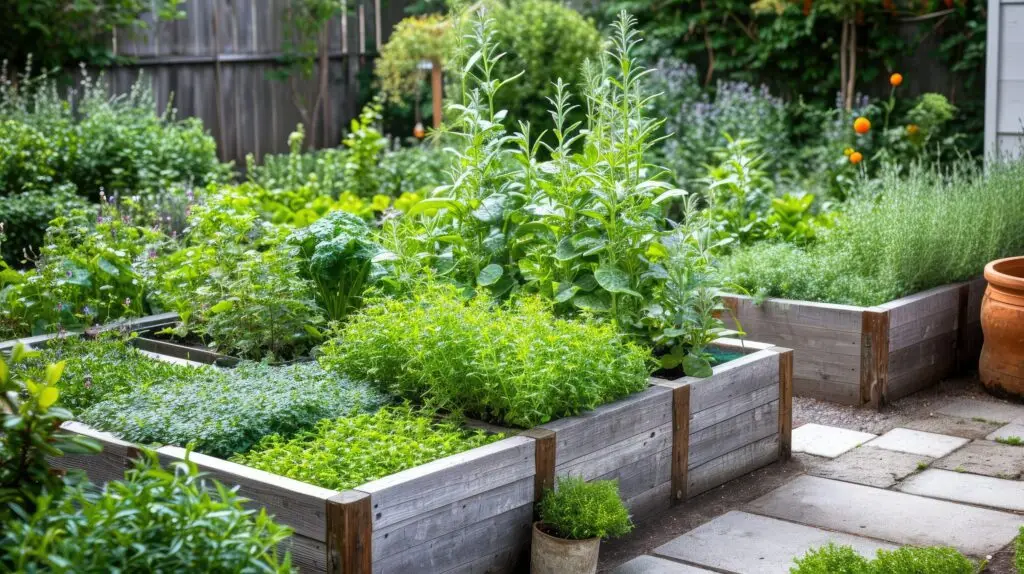
Raised bed gardening is really the way to go, particularly if your native soil is terrible with clay, rock, or sand. With raised beds, you control the quality of your soil, leading to healthier plants and a better harvest. The only problem is that filling those raised beds with high-quality soil can be pretty expensive — but as a gardener, you know that everything starts with healthy soil, and you don’t want to cheap out, right?
Fortunately, there’s good news for both the conscientious gardener and the budget-strapped homeowner. When you have raised beds that are 18” – 24” deep, you can layer the material in your raised beds, conserving the top 12” for your more expensive, high-quality soil. Here’s how.
Layering Soil in a Raised Garden Bed
In this video, Birjette, a local organic seed grower from San Diego Seed Company discusses a method of layering soil in a raised garden bed known as Hugelkultur. Watch the full Layering Soil in a Raised Garden Bed video on the Kellogg Garden Youtube Channel.https://www.youtube.com/watch?v=0t5TNZ8NqeM&t=2s
How to Layer
All of your layering materials need to be organic and toxin/petroleum free. Over time, the base layers will decompose, but remember how deep your layers are when digging and turning soil so as not to disrupt your course, raw material.
1. Wood: Lay a thin layer of small twigs, branches, or bark at the bottom of your raised bed. You can also add other materials like newspaper and manure at this first step.
2. Less expensive soil: Add in a less expensive soil or loam, old potting soil, or native soil mixed with inexpensive soil. Don’t add any soil that has weeds in it, potting soil that is moldy or has a pest infestation, or the like. In this layer, you can also add in some leaf mold, compost from your pile, and grass clippings.
3. High-quality soil: Most raised bed plants need 6-12” of good quality soil, so I aim for that depth when I add the “good stuff.” Fill your bed to within an inch under the top edge of the bed — I actually fill mine right to the top, as soil has a way of settling down after watering in.
Note: If you have an existing bed with old soil in it, you can “top” it off with higher quality organic raised bed soil. This is particularly true if your old soil has settled a number of inches down and you not only need better quality but more depth.Kellogg Garden OrganicsAll Natural Raised Bed & Potting Mix
**Product not available in AZ, CA, HI, NV, UT. For a comparable product in these states click here.Other Cost-Cutting Strategies
• Use 100% high-quality soil in your smaller or shallower beds. If your bed is a 4 x 4 or 12” deep or less, fill it with the best soil you can get.
• Buy bulk at a landscape supply yard, which can save you more than 50% of your budget.
• If you opt to buy in bulk, arrange to pick it up yourself if you have a truck. You’ll save on delivery, which can be $100 – $150. In addition, some landscape supply yards have a minimum purchase of several yards, and you may only need one.