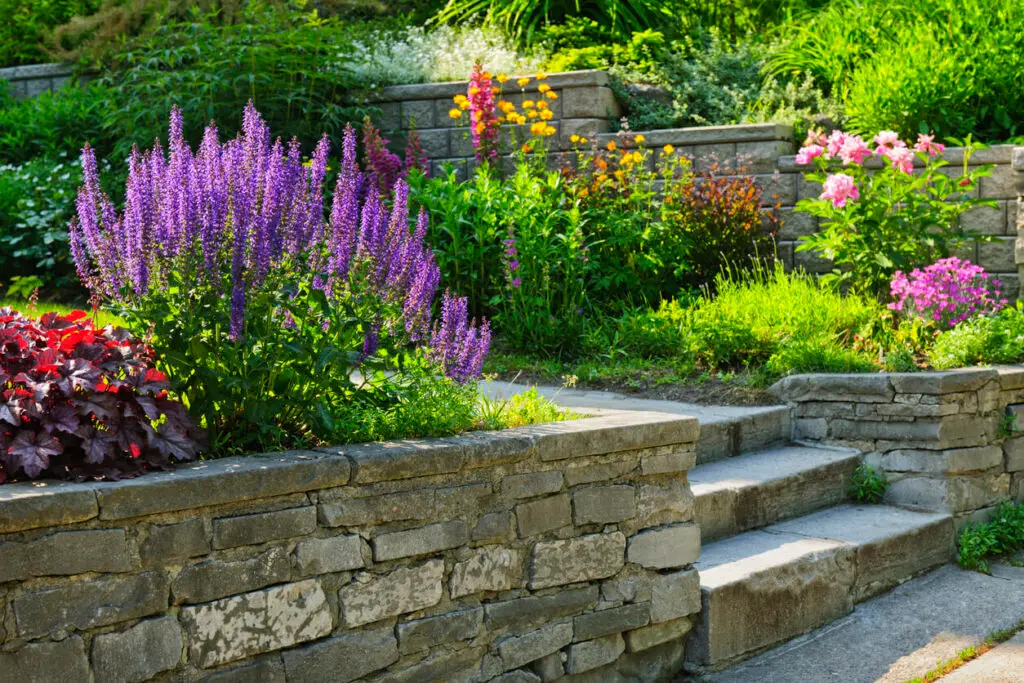
As a landscape designer, I often visit new clients’ homes where the challenge is the same — how to deal with a sloped backyard (or front yard). Certainly, you could simply leave it alone and enjoy nature as it is, but there are inherent problems with that (erosion or water drainage towards your house, and loss of usable outdoor living space). So, if you want to correct a slope, what do you do? You create a tiered, or terraced, garden design.
Now, this could be a project you could do on your own if you’re a very experienced DIYer or have some background in building. It depends upon how steep the slope is, how large an area you’re dealing with, and how tall the terrace walls need to be. More complicated designs require the aid of an experienced landscape contractor or even a structural engineer, so please — respect your skill level and employ help accordingly.
The Benefits of a Tiered Garden Design
Designed and executed properly, a tiered garden design can be a stunning focal feature in your yard. But aside from aesthetics, what are the benefits?
- Turns a previously unusable part of your yard into a functional one
- Minimizes erosion, which can lead to poor soil health
- Minimizes poor water drainage, particularly toward your house, and which can also create poor soil health
- Creates increased opportunity for planting
- Adds beauty, structure and focal points
Design & Building Tips for Tiered Gardens
- Choose your retaining material to complement both the natural surroundings as well as the style of your home. Natural rock works well with casual or country homes, cut rock blends beautifully with a wider variety of home styles, and steel reflects a cleaner, more modern look. Wood can also work well, but remember — it’ll degrade over time and will require repair or replacement. And don’t forget about stucco, CMU, or brick.
- Know what kind of footing you need to pour or create, or if you need one at all. Stone, CMU, or brick walls typically require a poured concrete footing, but steel or wood walls do not.
- Be sure you check with your local authorities and pull any necessary permits. Going around local codes and laws will only get you into some hot water in the future — so not worth it.
- Remember to add weep holes into the build. Water will always seek the lowest point, and with retaining walls created for tiered gardens, you want to direct the water where you want it to go and give it a way to drain.
- If your tiers run the full width of your yard, design a stairway feature into it so you can easily access it for maximum enjoyment and ease of maintenance. Stairway material can match or contrast with the wall material; your choice!