Even if you aren’t yet an indoor or outdoor gardener, you can still compost to reduce your keep
your organic waste out of the landfill to reduce your negative carbon footprint.
Compost Sharing
If you aren’t going to use it yourself, what else can you do with your compost? You can offer it to your neighbors who garden or donate it to a community garden. To encourage urban composting, many cities including New York City, Chicago, Austin, Denver and San Francisco now offer compost pick up services. If you’re adventurous, consider becoming a guerrilla gardener and deposit your compost in planted areas around your neighborhood (we won’t tell.)
Some Rules of (Green) Thumb
Whichever composting method you choose to use, here are some rules of thumb for making a compost to achieve the dark, rich “black gold” that will nourish some very lucky plants:
1. Mix Up the Green With the Brown
Balancing carbon and nitrogen accelerates microbe production and also reduces odors. Aim to make a compost that is 1/3 green material (nitrogen-rich food scraps and coffee grounds) and 2/3 brown material (carbon-rich leaves, bark, paper, and sawdust.)
2. Maximize Your Carbon Handprint
Keep some shredded paper or dry leaves to toss in each time you add food scraps or coffee grounds to the bin. A handful or two will of brown material adds carbon and keeps your compost from getting too soggy.
3. Turn, Turn, Turn
To maximize microbial action, turn the contents of your bin often to keep the compost warm and mix things up to prevent soggy or dry pockets. A small shovel or hand trowel works well or roll your bucket back and forth a few times to shake things up.
4. Think Small
Smaller pieces break down faster so chop up food into small bits and shred or tear paper into thin strips. (A paper shredder is perfect for this if you happen to have one on hand.)
5. If Worms Don’t Make You Squirm
Although it may sound gross to some people, worm composting (vericomposting) is a very efficient and clean way to compost indoors as it requires little space and will break down the waste relatively quickly.
6. Bin There, Done That
We’ve shared this part before, but we can’t emphasize more how important it is to compost the right items and leave out the wrong ones.
What to Compost:
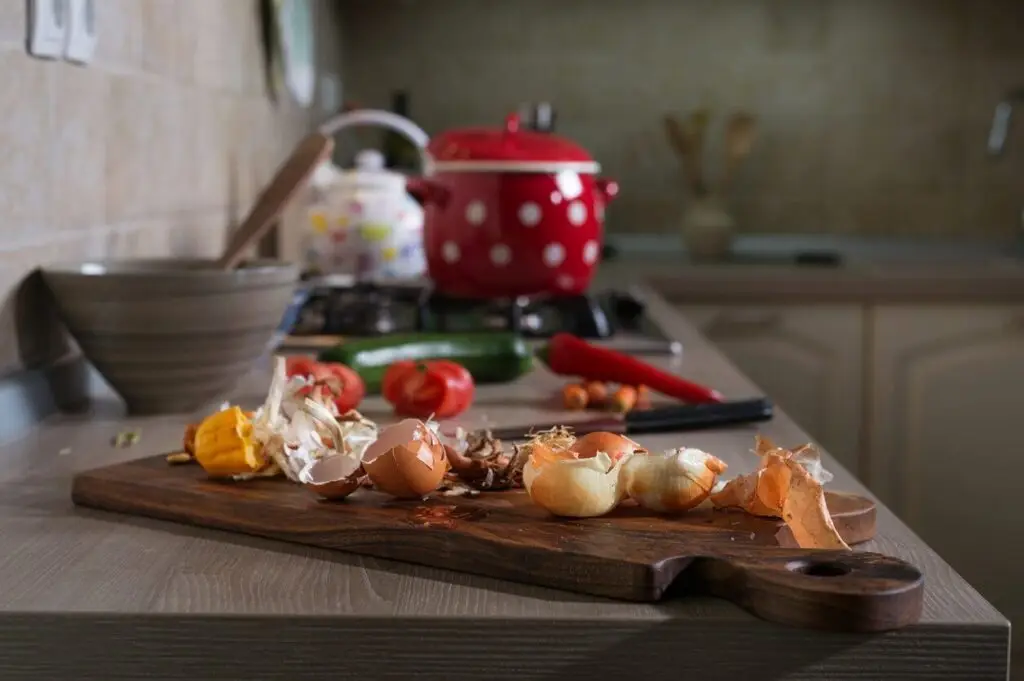
Fruit and veggie scraps, coffee grounds, eggshells, shredded paper (not glossy or coated), untreated wood, and houseplant trimmings.
What Not to Compost:
Except for Bokashi method: Meat, Fish, bones, dairy, and fats.
7. DIY or Purchased Bins
If you’re handy and crafty, by all means consider making a simple DIY apartment size indoor compost bin. For those interested in reducing waste while also conserving time, there are many reasonably priced indoor compost bins available for purchase. Remember, it’s the small individual efforts that together add up to a healthier life and a cleaner planet.