Planting Zones
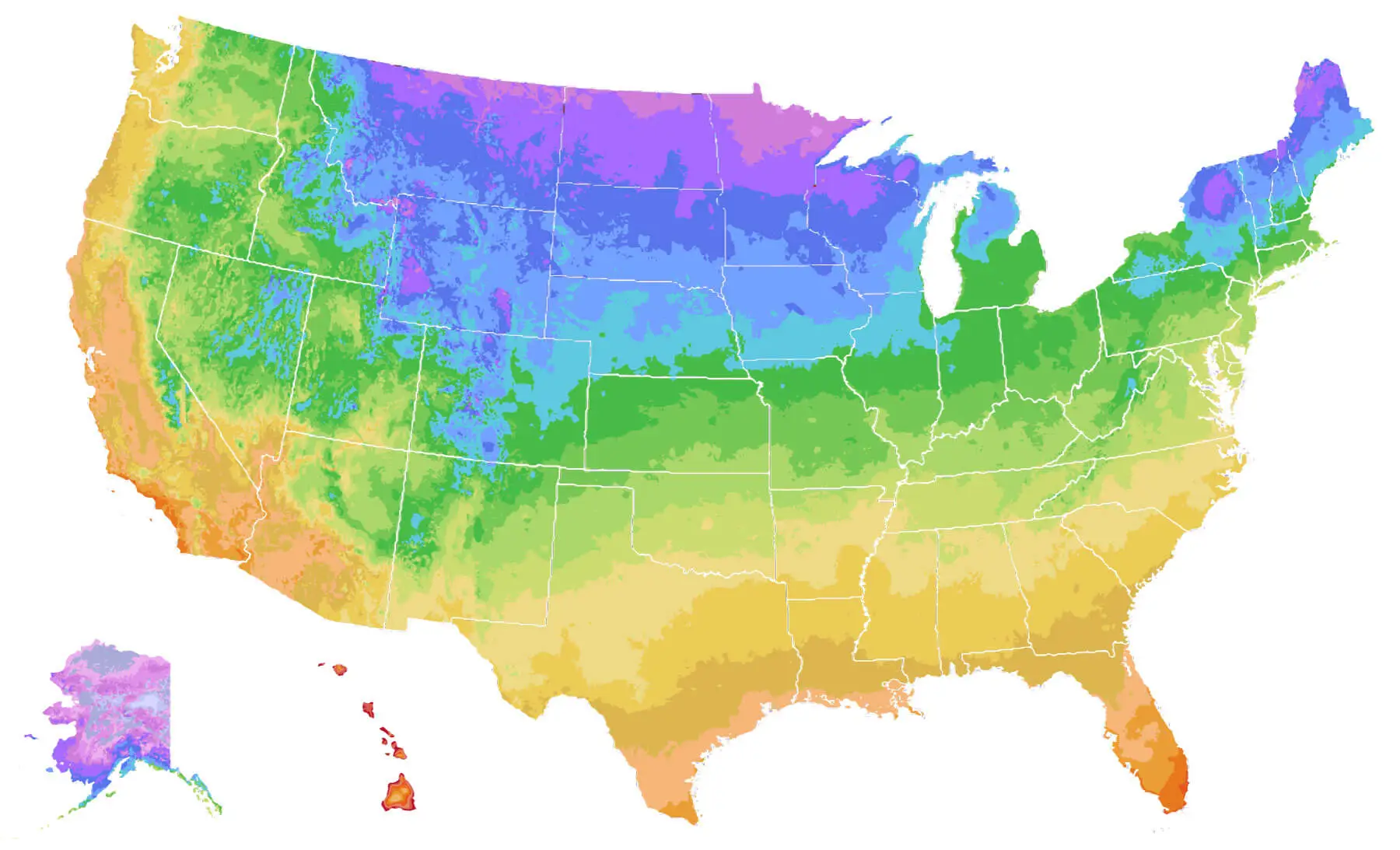
[show_all_planting_zones][zone_downloads]Identifying your plant hardiness zone is essential to your garden growing success. The United States Department of Agriculture (USDA) Plant Hardiness Zone Map provides an informative view of average temperature trends across The United States and Canada (recently updated in late 2023). Zone Hardiness maps are based on the average yearly extremes for minimum temperatures in a given area.
These maps do not account for average peak temperatures in a particular zone. Understanding your gardening zone for plant hardiness can help you decide which plants to select for your garden and can mean the difference between a successful crop and a failing garden.Your geographic location and climate will affect how successful your flowers or plants will grow in your gardening areas. If you select plants that are only somewhat cold hardy for your particular zone, a harsh winter with well below average temperatures could lead to the demise of the plants.
It is important to note that USDA Plant Hardiness Zones are not entirely foolproof. Frequently, planting zones have micro-climates that occur within each geographical area. Unprotected areas of open land or areas of the ground that slope down into valleys can be more prone to frost and colder temperatures than higher elevations. On the opposite end of the spectrum, sometimes temperatures can also soar higher than what the map claims they should be.
In November 2023, the USDA released an updated version of the Plant Hardiness Zone Map, marking the first update since 2012. The update is based on 30-year averages of the lowest annual winter temperatures across the country. Some gardeners may find that their planting zone has changed – check yours now below with our easy tool!
What is My Planting Zone?
Find out what your USDA Plant Hardiness Grow Zone is, and you will uncover what plants are likely to thrive in your location of the United States and Canada. The USDA Zone Hardiness Map is divided up into 13 planting zones. They are sectioned off by a 10-degree Fahrenheit differential for the average annual minimum temperatures. The larger the number is, the warmer the temperature is in the corresponding garden zone. For added clarity, zones are broken down into subsets of a and b, which represents a 5-degree differential in which a is colder than b is.
Look at the map and pinpoint your geographical location. The majority of the United States falls under USDA Planting Zones 4 through 8. Most garden centers label their plants with markers that signify a plant’s grow zone. If you are planning on purchasing a plant, tree, or shrub, you should cross-reference the plant with the zone for your region on the map to determine if it is a suitable growing environment where that plant will thrive.
In addition to identifying your hardiness zone, it can be helpful to reach out to your local garden center for additional guidance. They are experts in your community and your planting zone and can help you troubleshoot any further questions that you may have.
Other Factors that Affect Plant Growth
Purchasing seeds, dry root plants, and potted plants that are determined to be hardy for your zone will not guarantee that the plants will thrive in your garden. Plant Zones are not the only factors that determine plant hardiness and growth of plants. Sunlight, soil structure and pH, nutrient levels, water, and plant spacing also significantly impact the viability of plants.Sunlight
When planting, consider the amount of sunlight that your garden receives each day. Some plants thrive well with a minimum of 6-8 hours of sunlight per day. While others prefer partial or full shade for its optimal growing conditions.Soil Structure and pH
Soil structure and pH are crucial components to healthy plants. Soil consistency can vary from geographical region to region. It can even vary significantly within the bounds of your property. Different plants have different soil structure requirements and thrive best within a specific pH range. In addition to planting plants specific to your grow zone, it is essential to test your soil and amend it according to plant needs.Kellogg Garden OrganicsAll Natural Raised Bed & Potting Mix
**Product not available in AZ, CA, HI, NV, UT. For a comparable product in these states click here.Water
It is important to consider a plant’s water requirements before adding it to your garden. All plants require water to help them grow, but some plants are more drought-tolerant, while others require more regular watering to help them thrive. Know your plant’s requirements in conjunction with its USDA Grow Zone to ensure a successful crop.Plant Spacing
All plants have different spacing requirements that can help ensure sufficient airflow. Such airflow helps to keep leaves dry and free from disease and allows plants to spread out to reach their full potential. If plants are too crowded together, their growth can be stunted due to nutrient drain, shadowing from other plants, and the development of fungus.