What Is the Best Soil for Indoor Plants?
The best soil for indoor plants is a light, well-draining potting mix made from peat moss or coco coir, perlite, and a little organic matter. Skip garden soil indoors, because it packs down in pots, drains poorly, and can bring pests and disease inside.
A plant in a pot only has the soil you give it. Its roots can’t reach past the edges looking for water or food, so the mix does a lot of the work. Below you’ll find starting ratios for common houseplants and a recipe for mixing your own. If measuring perlite isn’t your idea of fun, skip to the bagged options at the end. A good indoor mix gets most houseplants right on its own.
Indoor Soil Mix Quick Guide
Most houseplants grow well in 2 parts peat moss or coco coir to 1 part perlite. Tropical plants like a chunkier mix with orchid bark, and succulents need extra perlite or pumice so water drains fast.
| Plant type | Starting mix |
| Most houseplants | 2 parts peat moss or coco coir, 1 part perlite |
| Tropical houseplants (pothos, philodendron, monstera) | Equal parts potting mix, orchid bark, and perlite |
| Succulents and cacti | Equal parts potting mix and perlite or pumice |
| Moisture-loving plants (ferns, calatheas) | 3 parts peat moss or coco coir, 1 part perlite, 1 part worm castings |
| Herbs | Indoor potting mix straight from the bag |
If a plant stays soggy, add more perlite. If it dries out in a day or two, add more peat or coir. For desert plants, our guide to the best soil for succulents goes deeper.
How to Make Your Own Indoor Potting Mix
What You’ll Need
Ingredients
- Peat moss or coco coir, for the base
- Perlite or pumice, for drainage
- Worm castings or compost, for nutrients
- Orchid bark, if you’re mixing for tropical plants
Tools
- A large bucket, tub, or tarp for mixing
- A scoop or cup for measuring (any size works, since the recipe uses parts)
- A watering can or spray bottle
- Gloves and a dust mask, since dry peat and perlite get dusty
Steps
- Pick a base. Peat moss and coco coir both hold moisture well. Coir comes from coconut husks, so it’s a good choice if you’d rather not use peat.
- Add drainage. Perlite or pumice creates air pockets so roots can breathe and extra water can escape.
- Add nutrients. A scoop of worm castings or compost feeds plants slowly.
- Adjust for your plant. Use the chart above to shift the ratio for tropicals, succulents, or ferns.
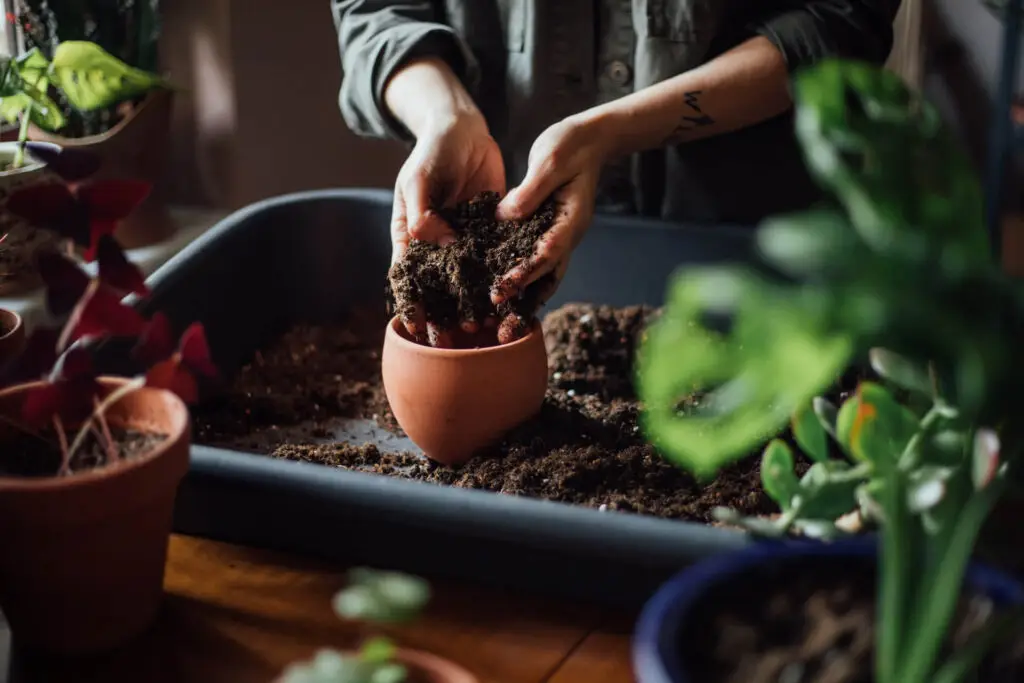
- Mix and moisten. Stir everything together, then work in about 1½ cups of warm water by hand. Squeeze a handful. It’s ready when it holds its shape, drips a drop or two at most, and crumbles when poked. If it’s still dry, add another ½ cup, then let it sit an hour before potting.
What Makes a Good Indoor Soil Mix
A good indoor soil mix holds enough moisture to keep roots hydrated between waterings while leaving room for air, so roots don’t sit in soggy soil. It also feeds plants gradually and keeps its loose texture for months.
- Moisture control. Roots stay hydrated between waterings without sitting in water.
- Airflow. Tiny air pockets let roots breathe, which helps prevent root rot.
- Nutrients. Potted roots can’t forage, so the mix supplies steady food.
- Structure. A good mix is still loose enough to push a finger into a year later.
- pH. Most houseplants prefer slightly acidic to neutral soil, around 6 to 7.
Impact of Soil Ingredients
| Ingredient | What it does |
| Peat moss or coco coir | Holds moisture |
| Perlite, pumice, or vermiculite | Adds air and drainage |
| Worm castings or compost | Adds nutrients |
| Orchid bark | Makes a chunky, airy mix for tropical plants |
Every mix breaks down over time. Repotting with fresh mix every year or so, or adding in soil amendments on a recommended schedule, keeps the structure loose.
Best Bagged Soil for Indoor Plants
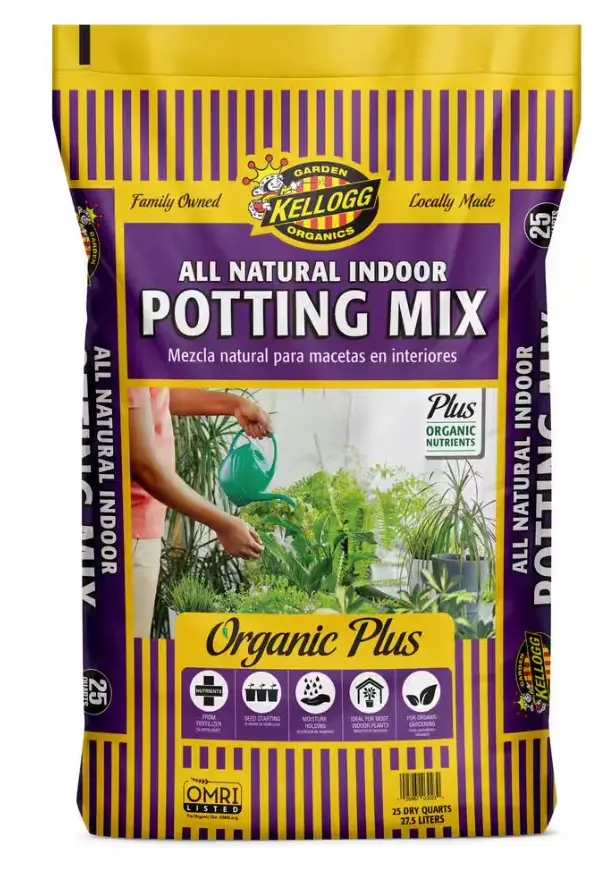
The best bagged soil for most houseplants is an indoor potting mix with peat, perlite, and organic fertilizer already blended in. Kellogg Garden Organics All Natural Indoor Potting Mix is an OMRI Listed organic indoor potting mix made without composted manures, so it’s less likely to attract fungus gnats. Use it straight from the bag for most houseplants and herbs, or as the base for the mixes above. For succulents, cacti, and tropicals that need faster drainage, reach for Kellogg Garden Organics Palm, Cactus & Citrus Mix.
FAQs
Can you use garden soil for indoor plants? No. Garden soil turns dense in a pot and can bring pests indoors with it. Use a potting mix made for containers instead.
What is the best soil mix for indoor plants? A mix of 2 parts peat moss or coco coir to 1 part perlite works for most houseplants. A bagged indoor potting mix is the easiest option.
Is potting mix the same as potting soil? The two terms are used almost interchangeably. Most products sold under either name contain little or no actual soil and are blends of peat or coir, bark, and perlite.
What soil is best for tropical houseplants? A chunky mix of equal parts potting mix, orchid bark, and perlite suits pothos, philodendron, and monstera.
What soil do succulents need indoors? Succulents need a fast-draining mix, such as equal parts potting mix and perlite or pumice. For more on cacti and succulents, see our guide to the best soil for succulents.
Do indoor plants need different soil than outdoor plants? Yes. Indoor plants dry out more slowly, so they need a lighter mix that drains well. Many outdoor mixes also contain manures, which can bring fungus gnats inside.
Can you use raised bed soil for indoor plants? It isn’t ideal. Raised bed soil is heavier and made for outdoor beds, so it can stay too wet in a pot. Here’s the full breakdown of potting mix vs. raised bed soil.
How often should you replace soil in indoor plants? Most houseplants need fresh mix every 12 to 18 months, or sooner if the soil compacts or roots fill the pot.
How do you keep fungus gnats out of houseplant soil? Let the top inch of soil dry between waterings, since gnats lay eggs in damp soil, and choose a mix without composted manures. Yellow sticky traps catch the adults.
Share The Garden Love
Send this to a friend ready to move their garden indoors for the winter.